Scientific Animation Services
PhD-Founded & Led
Science-Grade Simulations
Trusted by Nobel Laureates
Scientific Animation Built on Structural Biology, Not Artists' Assumptions
PhD-founded scientific animation for pharma, biotech, research teams and scientific publishers — built from real structural data and science-grade molecular simulations done in-house, the same computational methods used in drug discovery, for content that holds up under expert scientific review.
The step everyone else skips
Why Most Scientific Animation of Molecular Processes Fails Expert Review — and How We Fixed It
Starting our careers as molecular biologists, we worked with PDB (Protein Data Bank) structures in our own research — so we know the methods leave over 90% of database structures incomplete: missing flexible loops, transmembrane domains, glycosylation, and any data on how molecules change shape when they interact.
The animation industry, mostly led by artists, builds on these partial PDB structures anyway. For many audiences that works. But when high-stakes decisions are made, scientific accuracy might be the whole point, not a detail — and any mistake or inaccuracy can undermine the entire team effort.
We took the computational methods used in drug discovery and built a unique pipeline that completes what the databases leave out and simulates how molecules behave, as accurately as the current state of computational biology allows.
How most studios work
Download, Assemble, Animate
Download partial structures from PDB.org
Publicly available protein structures are downloaded and imported directly into animation software. Fast — but these structures are not complete molecular representations, often fragments without any data about conformational changes during interactions.
Built on incomplete structures
Studios assemble the animation directly from database structures, with no step to complete what's missing first — like building from a LEGO set with broken and missing bricks. The gaps don't disappear; they end up in the final animation, where any expert spots them.
Interactions shown without conformational data
Real proteins change shape when they bind. Most artist-led studios skip this entirely — molecules snap together like rigid puzzle pieces, with no sign of the conformational change that actually happens during the interaction. To an expert, it reads as biology that couldn't occur.
Result: visually polished, scientifically fragile
For many audiences, an animation built from broken, incomplete LEGO bricks could work fine. But in front of an audience with deep subject-matter expertise — or in high-stakes communication where precision is not a feature but a cornerstone — any inaccuracy can undermine the entire team effort.
How Visual Science works
Compute, Complete, Simulate
Aggregate all available structural data
We check and assess every source — PDB entries from X-ray crystallography, cryo-EM maps, published literature, and similar structures for homology modeling if needed — and combine them into the most complete possible structure report, before any further simulation begins.
Completed with computational biology
We rebuild what the databases leave out — flexible loops, transmembrane domains, glycosylation — using homology modeling, de novo prediction, and molecular docking. The result is a complete, physically plausible model of the full protein and its interactions, not a partial database entry.
Run science-grade molecular dynamics simulations
We run science-grade molecular dynamics — the same simulations used in academic research and drug discovery — to model how proteins and nucleic acids actually move, bind, and change shape under realistic conditions. Every interaction is simulated, not assumed.
Result: animation that withstands expert review
Put our work in front of the same expert audience, and the science holds — published in Science and Cell, recognized by Nobel laureates and trusted across the field. For every project, the same methods behind a peer-reviewed publication are applied, and in many cases the work goes through actual peer review by leading experts in the field.
This pipeline is why Visual Science holds two awards from Science magazine and National Science Foundation —
the only animation company to do so — and why our models are used in Nobel Prize presentations, published in Cell's gallery of the ten most significant images in the history of HIV research, and cited in over 100 scientific publications. Today our work is trusted for scientific accuracy by Nobel laureates, Science and Nature editors, the American Chemical Society, Harvard and Cambridge, the European Hematology Association, and the world's leading scientific publishers. Many in medical animation claim science-first. We mean it literally.








Scientific Animation Accuracy Benchmark
How Visual Science Set the Standard for Atomic-Resolution Scientific Visualization and Animation
When Visual Science began in 2007, no method existed to study complex multimolecular structures — viruses, organelles, large molecular complexes — at true atomic resolution. Individual structures, often partial, were available in PDB. Stoichiometry came from cryo-EM and mass spectrometry. But no one had developed a method to integrate these fragments into a complete, atomic-level model of an entire assembly — with every component, structure, conformation, and interaction backed by available science.

Most detailed whole HIV virion image available before we started the project. Briggs J, et al. Structure, 14, 15-20, 2006
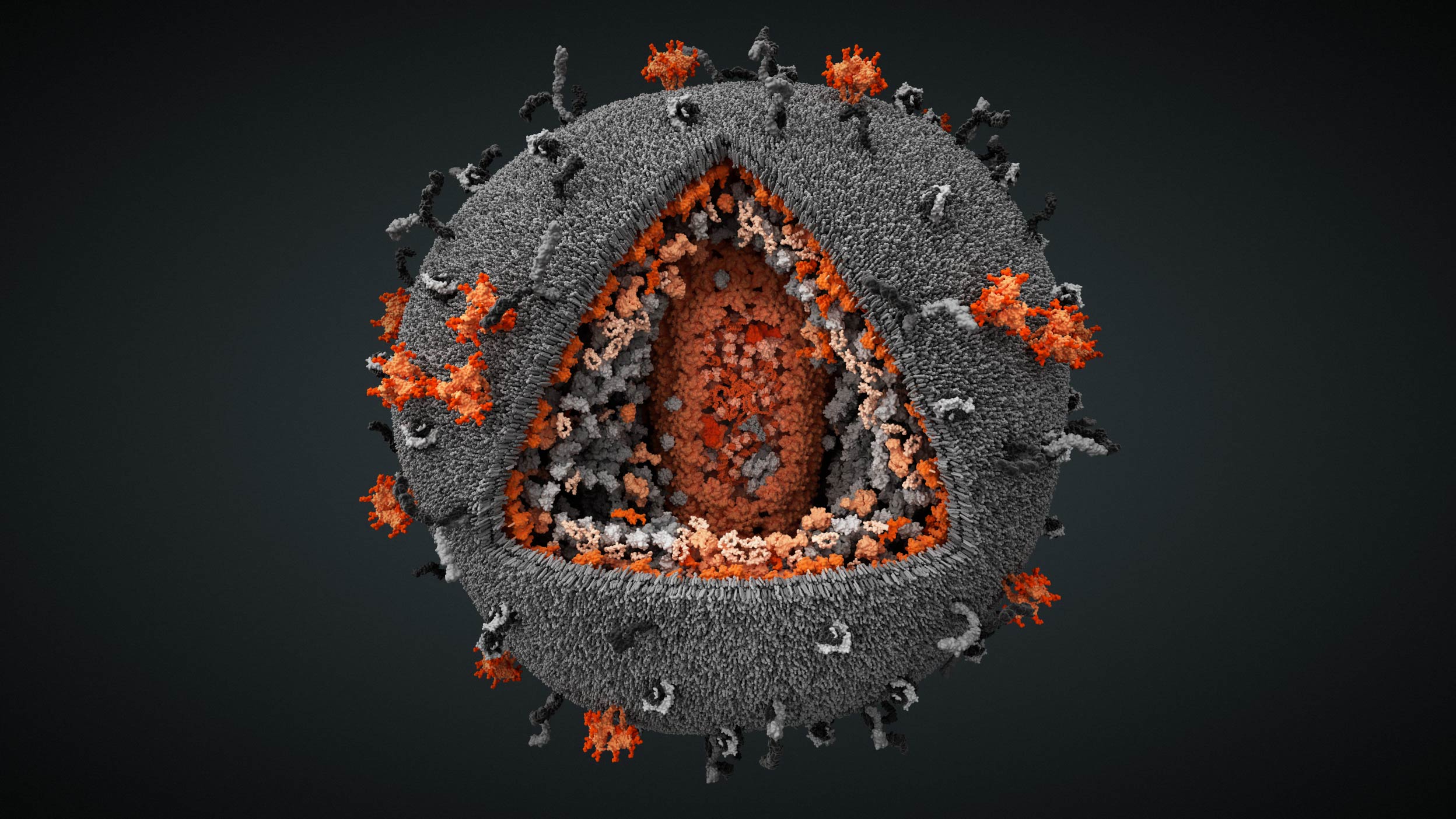
HIV whole model visualization by Visual Science, 2008. "Best scientific visualization 2009", Science Magazine and National Science Foundation.
In 2008, Visual Science's scientific team — working at the intersection of computational biology, structural biology, and visualization — asked a different question: what if every available data source could be integrated, reconciled, and used to compute a complete atomic-resolution model of an entire virus, or another structure of that scale and complexity?
The answer required combining PDB structural data, cryo-EM density maps, published stoichiometry data, molecular dynamics simulations, and extensive scientific literature review — the same approach used in advanced drug discovery research — to compute and assemble structures that had never been visualized at this level of resolution before.
The first model was HIV. It took four months of analysis and computation, integrated data from over 100 scientific publications, dozens of structures, communication with leading experts in HIV biology, and produced the most complete atomic-resolution model of HIV ever created. It was awarded Best Scientific Visualization of the Year by Science Magazine in 2009. Same year, Cell Magazine included it in its gallery of the ten most significant images in the history of HIV research. It was featured in the Nobel Prize presentation of Françoise Barré-Sinoussi — the Nobel laureate who co-discovered HIV — in dozens of leading books including Vaccines by Stanley Plotkin, which Bill Gates called "a bible for vaccinologists," and in over 100 media outlets including the New York Times, Scientific American, New Scientist, and National Geographic.
That methodology resulted not in a single project, but was developed into a repeatable scientific pipeline — and became the foundation of the High-End 3D scientific animation production approach at Visual Science.
Development Timeline
Refining the Scientific Animation Method Over the Past 17 Years
2008
HIV
First complete atomic-resolution model. 100+ publications integrated. 4 months of molecular computation. Awarded by Science and NSF, published in Cell, The New York Times, Scientific American, National Geographic and 50+ leading media outlets.

2012
Ebola Virus
Completed during the West Africa outbreak. Contributed to global scientific communication efforts. Awarded by Science and NSF in 2013, published in 50+ leading media outlets.
2013-2015
Zika Virus, A/H1N1 Flu
Produced in response to the Zika and A/H1N1 outbreaks. Widely used in scientific and public health communication, featured in 50+ leading media outlets.
Featured globally
2018
CRISPR-Cas9
Produced as a non-profit educational initiative to increase public awareness of leading fundamental groundbreaking research that could potentially lead to new therapies for previously incurable diseases and conditions. Endorsed by Dr. Jennifer Doudna and Dr. Emmanuelle Charpentier, who became Nobel Prize winners two years later, in 2020.
Featured globally
2020
SARS-CoV–2
Atomic-resolution model of the COVID–19 virus particle. Featured in CNN, The Telegraph, and 50+ leading media outlets and dozens of educational books.
Global media coverage
2018-2026
70+ projects
Scientific animations for cutting-edge research, breakthrough technologies and educational projects with Harvard, Cambridge, Wiley, Elsevier, Nobel Prize winners ant leading Biotech and Pharma teams.
Global media coverage
Selected Scientific Animation Case Studies
High-end 3D Scientific Animation in Practice: Science Awarded, Nobel Laureate Endorsed, Trusted by Leading Biotech and Pharma Teams


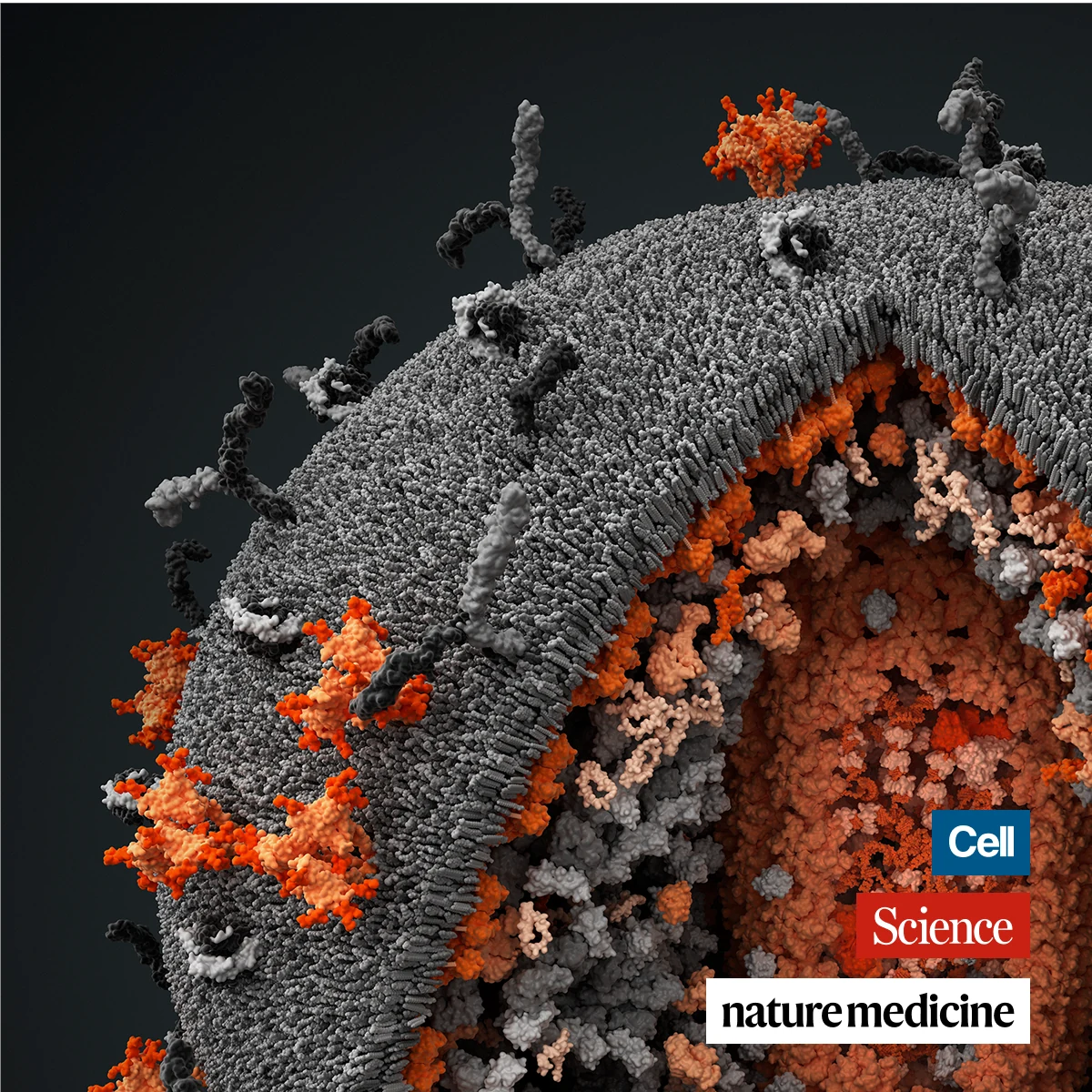





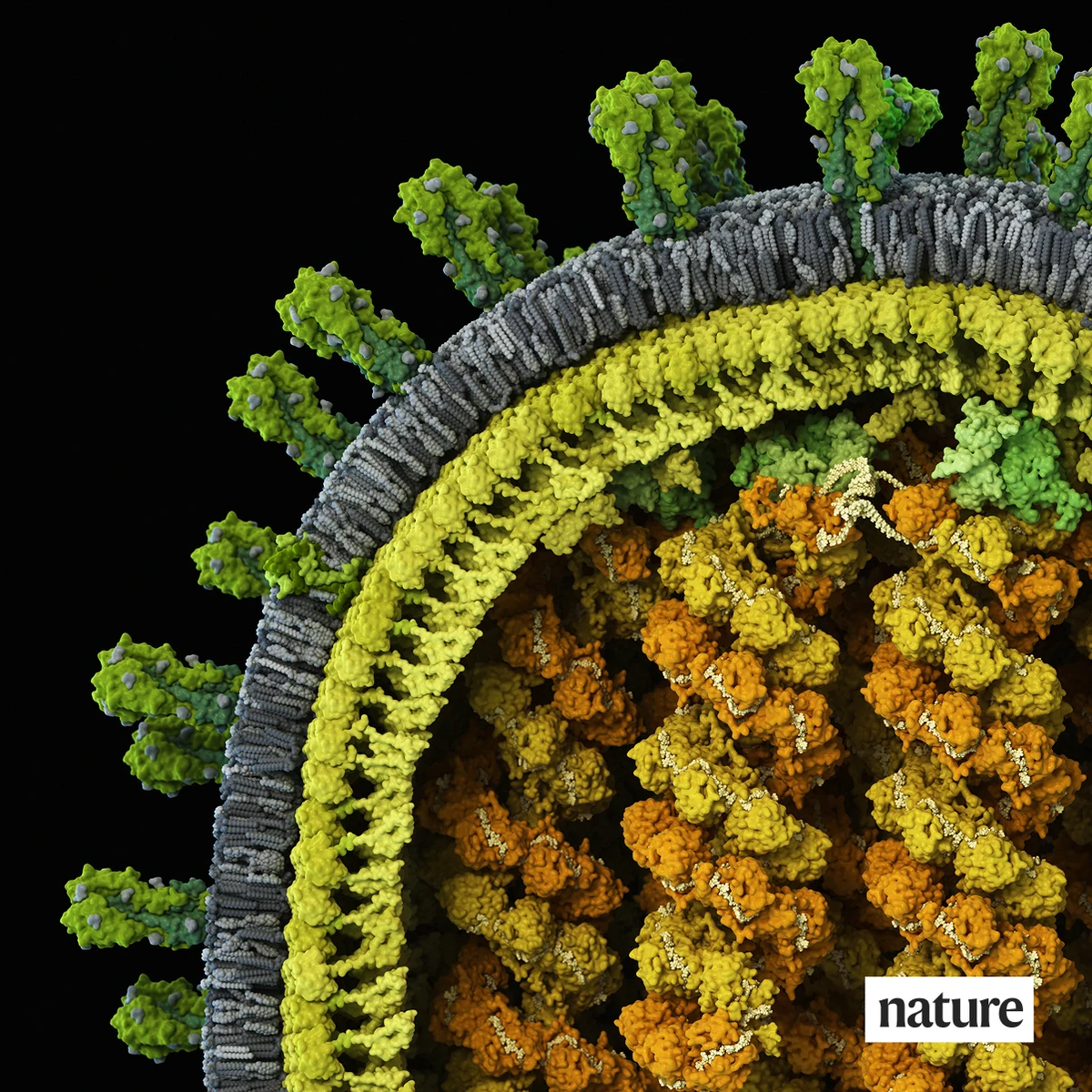

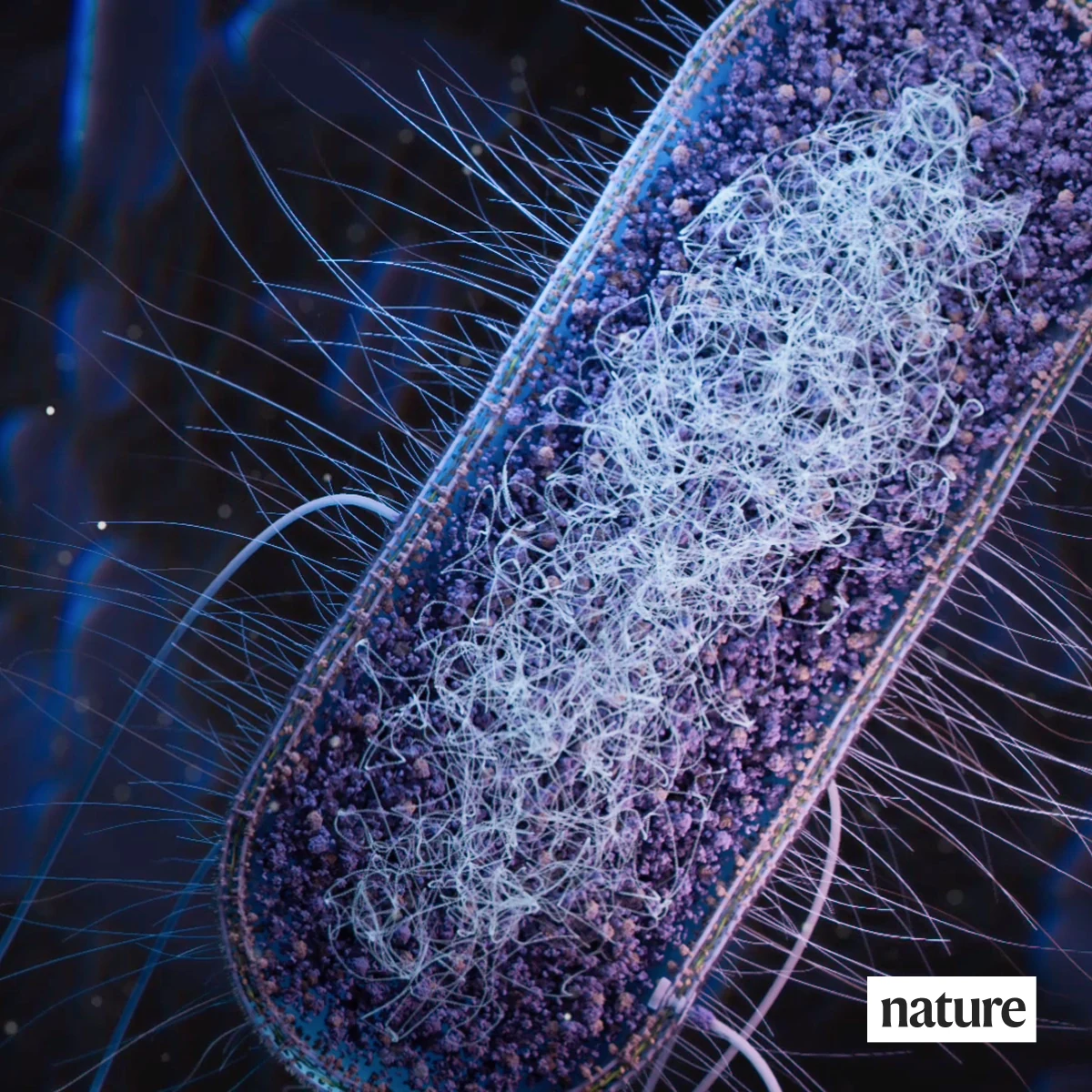



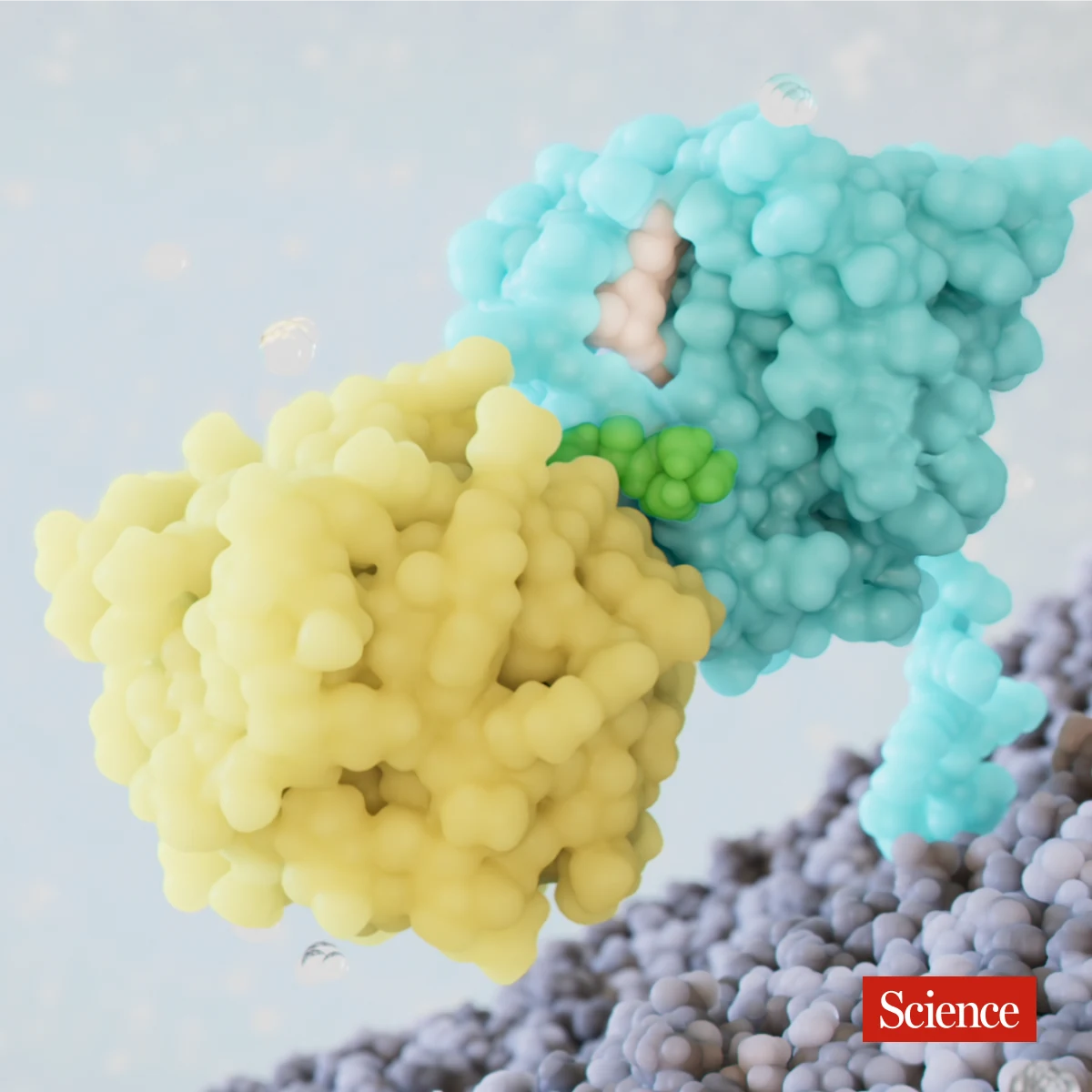

Book a demo call to see other 50+ industry leading scientifically accurate projects developed for major scientific publishers, top universities, biotech and pharma teams, European Hematology Association, American Chemical Society and Nobel prize winners.
Scientific Animation for Pharma, Biotech, and Research Teams That Can't Afford to Get the Science Wrong
Visual Science works with teams where scientific accuracy is not a preference — it is a non-negotiable requirement of the communication.
What We Create
Scientific Animation Services: 4 of 10 Formats Built for Scientific Communication
Visual Science produces the widest range of medical animation types on the market — 10 main types and 20+ subtypes, including several unique formats not available elsewhere. These are the different types of scientific animation available to pharma and biotech teams — from market leading accuracy science-grade molecular 3D to highly accurate but schematic Pathway3D. What varies between them is method, not standard: science-grade simulations, 2D vs 3D, storytelling and modeling detail. Every type meets the same standard of scientific rigor and exceptional visual quality. The right choice fits your program stage, audience, budget, and timeline.
No need to choose one format — we mix and match animation types
Most programs benefit from a mix. Dynamic scenes benefit from Main 3D. Scenes requiring industry-leading molecular accuracy go to High-End 3D. Less dynamic scenes are well-served by Deck 3D for fast production, while data-heavy scenes work best in Main 3D + 2D or Data Visualization. A flexible and transparent approach lets clients build optimal combinations for their program stage, audience, and budget. See all 10 medical animation types.






















Frequently asked questions
What should a clinical-stage biotech look for in a scientific animation company?
When choosing a scientific animation partner, four capabilities matter most.
First, the science and the story should live under the same roof. You want PhD-level scientists who can understand a novel mechanism, identify what actually matters to the audience, and build the narrative around the strategic objective — not a production team that simply visualizes a finished brief.
Second, molecular accuracy has to go beyond artistic interpretation. The underlying structures should be built and validated using research-grade molecular modeling tools, so the resulting visuals are scientifically defensible even under expert scrutiny.
Third, speed matters. Financing milestones, data readouts, launches, and congress deadlines are fixed. A modern production platform should be able to deliver sophisticated scientific content in weeks rather than months without sacrificing quality.
Finally, you should retain control without becoming part of the production team. The right workflow gives you visibility and decision-making power at every stage while keeping the time required from your team to a minimum.
Visual Science was built around these principles. Our PhD-led team combines scientific strategy, molecular modeling, storytelling, and production in a single organization. Our modeling capabilities have been trusted by Nobel laureates; our work has been recognized by Science and the NSF and published in Science, Nature and Cell. Our proprietary production technology enables delivery up to 5× faster than the industry average, while a tightly managed review process typically requires only 3–5 hours of client time for a 90-second animation. The result: 98% of clients rate their experience working with us 9 or 10 out of 10.
Ready to Start Your Scientific Animation Project With Visual Science?
Tell us about your science, your audience, and your milestone. We'll recommend the right animation type and outline a production approach built on structural biology — not studio assumptions.